October 8th, 2025
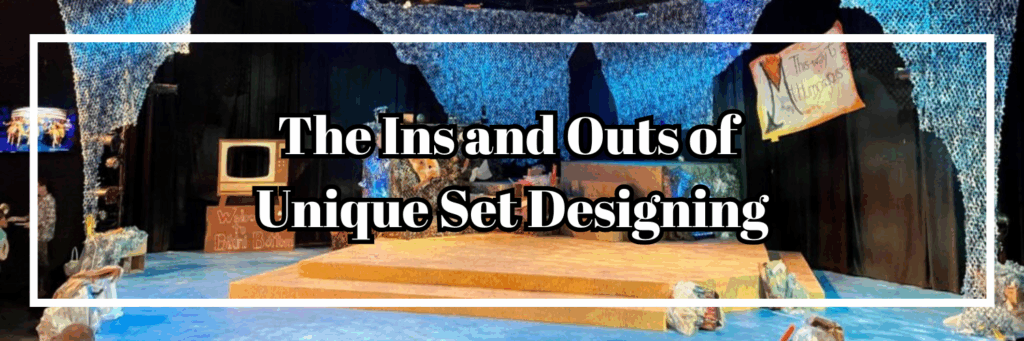
Set designers play a crucial role in the success of a production. Find out what it takes to communicate a story through visual language at Weathervane Playhouse.
Set Designers–What They Do + How They Do It
Set designers, also referred to as scenic designers or stage designers, have a unique and very important role in theater.
With the goal of immersing the audience and characters in the scene they are inhabiting, set designers must create an artificial environment that captures the story’s setting.
This includes rooms, buildings, and outdoor spaces, and all the furniture and decoration within them. However, scenic designers are not alone in this environmental construction, prop artists may also assist them with decorative elements!
There is much to consider in the design process of a stage and theatre for each performance: The scenery must match the aesthetics of the story determined by the script, it must be visually appealing and readable for the audience, it must coordinate with the characters’ movements and weight, and it must consider lighting, angles, and textures.
And for places like Weathervane Playhouse, who produce summer stock theater, the designs and props must transform quickly, and be adapted to something entirely different!
In order for an audience to grasp the concept of the story and feel a part of it, the stage must be accurate. And for an actor to perform as their character, they must also feel this same sort of immersion in the set.
How the set presents to others requires attention to fine detail and lots of skill and creative energy, this is why set designers need certain qualifications to design and engineer a set.
Working with a larger creative team, set designers collaborate and communicate ideas with others, especially the directors. Then they employ the skills of carpenters, painters, lighting technicians, and more, to actually create the scene or scenes.
This is why most set designers actually start out as carpenters and painters as they need knowledge in architecture, drafting and sketching, model building, budgeting, innovation, and creative vision. Some set designers have further education in theatre arts and obtain bachelor’s degrees from college.

But as long as they possess the ability to persist, be dedicated, problem-solve, communicate, and adapt, they have what they need to create successful and beautiful sets for theater productions.
The Design Process From Start to Finish
As most things start, the creative team has a meeting and discusses requirements and ideas for the show based on the script. Fully understanding the vision of the show and its set, is the first step for a designer. And the set designer really has to work with everyone to make sure everything is fit for their needs, like the choreographer, music director, and actors.
The set isn’t just what the patrons see and feel–setting, mood, and subtext–but also what is done backstage or behind the scenes for the ease of actors.
In one show, there is a lot to consider. Think about blocking, pyrotechnics, trap doors, large ensemble scenes, dance numbers, and then how it all works with lights, angles, and sound.
Scenic design is a special skill, they can visualize what the audience will see as well as how actors will use it within a show. On top of staying within budget or using materials on hand. The way designers can see a creative use for an object or space and then produce it is a talent!

After all these considerations, the set designer needs their ideas approved. Then they can move on to building a maquette, which is a small model of the set.
After this model is finalized and approved, they request the help of prop artists, painters, carpenters, etc. Time and budget in this step is crucial for a theater production.
But once it is all built to their liking, they face a hectic couple of weeks before the show, and then they sit back and enjoy the fruit of their hard work, staying close by to make any needed adjustments throughout performances.
And if they’re working for a summer stock theatre, the next set design is just around the corner and will probably include some of the same pieces from the last show!
The Unique Weathervane Stage: Challenges + Advantages
Weathervane’s largest stage in the Mary A. Alford Theater has a partial three-quarters thrust setting; if you haven’t seen it yet, it almost looks like a trapezoid! The audience sits on three sides of the stage, creating many angles and an intimate feeling.
Yet this can pose challenges for designers, as props are seen from multiple sides, and the stage isn’t a rectangle, but has more shape to work with and fill.
Many scenes at Weathervane use variable heights on stage, including platforms, stairs, and scaffoldings. These creative additions are pleasing to the eye and make the scene more realistic and complex.
There is a plethora of props, decorations, and architecture to utilize in Weathervane’s summer stock storage, all fit to be adapted to the next production. Designers coordinate greenery and textures with lights, and use certain color palettes, all to achieve a specific feeling within the setting–warm v. cool, outdoors v. indoors, country v. city, sophisticated v. casual.
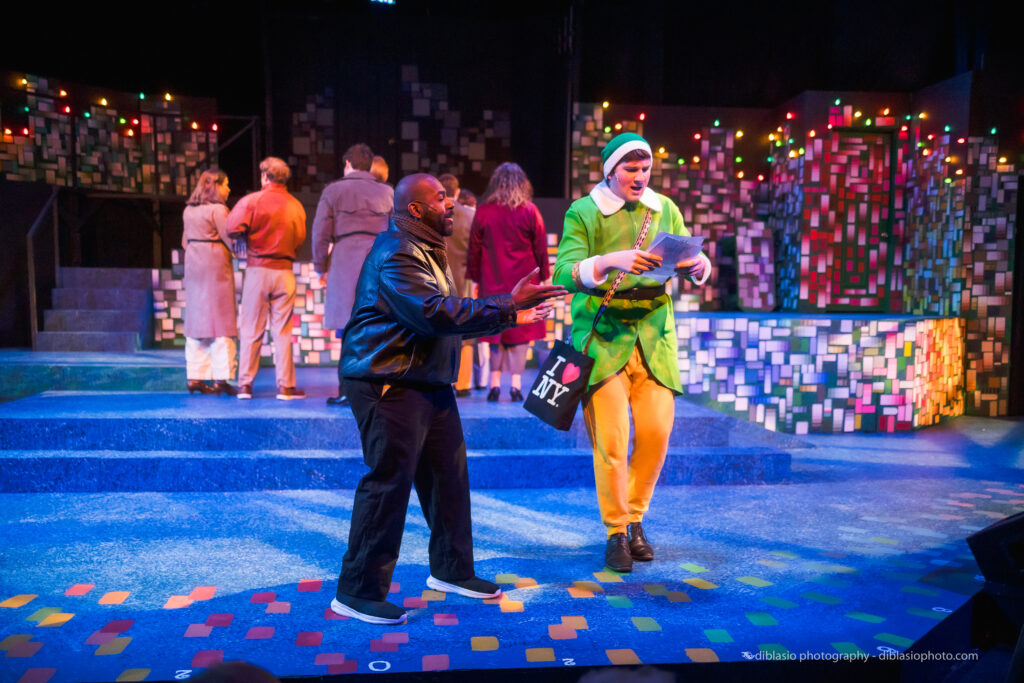
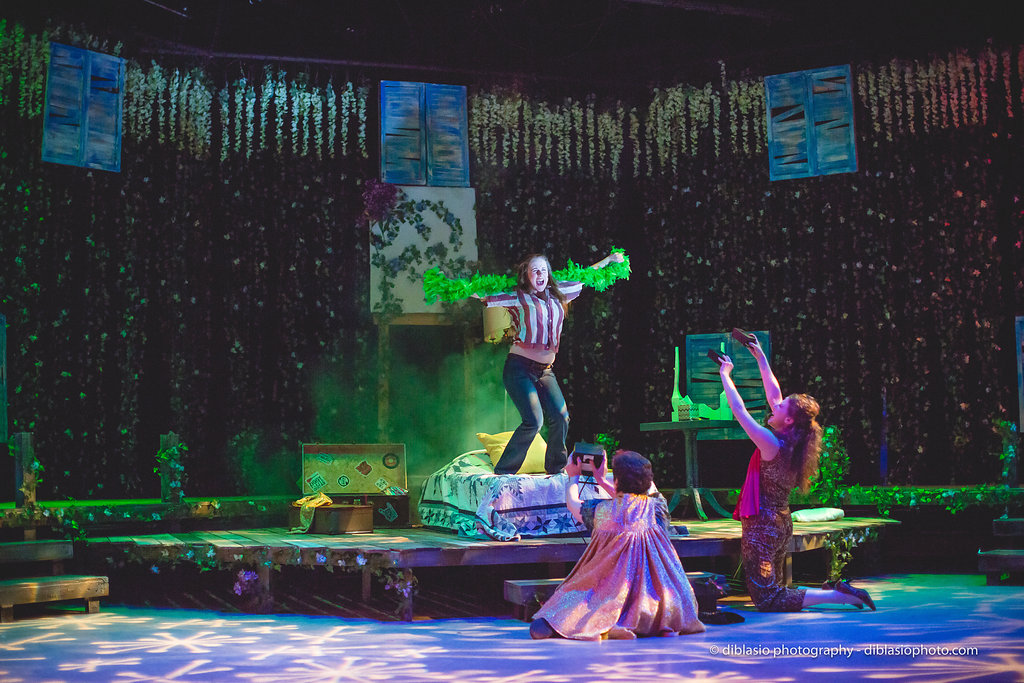
They use doors, fake walls, tables, chairs, couches, and a wide selection of props, all with designated places on stage. The stage must be organized, safe, and fit for every scene within the production.
But for Weathervane, the design is more than just on stage, the entire theater is considered and utilized! Actors use the stairs in the audience, and they have space backstage with certain exits and entrances, which is all a part of their performance. Just how your walk into the theater and the chair you sit down in determines how you experience the show as a whole. You should feel invited, informed, and comfortable in all aspects of your visit to best immerse yourself in the story production.

The challenge for Weathervane? Summer stock creates a quick turnaround–creating four shows in only two months! For this theater type, set designers face more time constraints, and have to transform many stock elements for each show.
To produce the performance in such a specific and creative way, and on a stressful timeline takes a lot of talent. Weathervane’s creative team has experience and good leadership, has great interest in the conception of sets and scenes, and harnesses the ability to uphold Weathervane’s value of entertaining, educating, and inspiring the community.
On your next visit, notice and admire the set before you, what does it feel like for you?