October 28th, 2025
Across many types of performances, lighting designers play a huge role in our understanding and enjoyment of a show.
What is Lighting Design?
Lighting is an abstract form of communication. What began in the Ancient Greek and Roman theatres as the use of sunlight to illuminate their scenes, has evolved into more creative and versatile forms of lighting, with LED color control, more equipment types, and improved mapping technology.
Lighting is not intended to be noticed, but is a part of the set that subliminally guides you and moves you. It is subtle and smooth and blends into the show.
A single bulb can determine the mood. Lighting designers focus on overall lighting design, operation, and special effects.
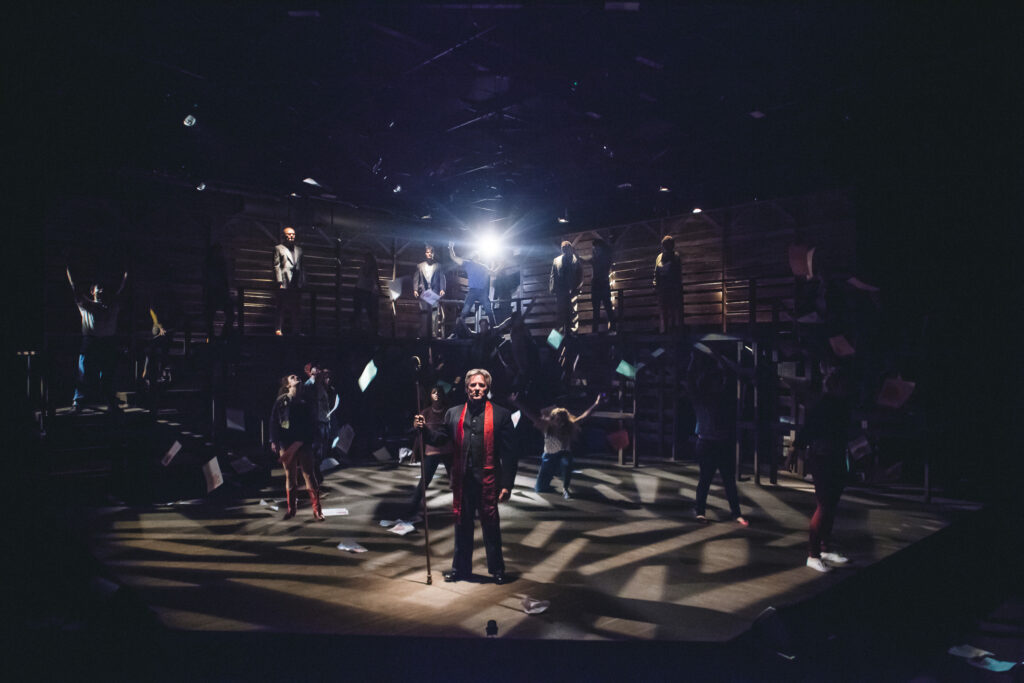
Lighting is a tool for storytelling, creating colors and moods, textures on walls and floors, framing the stage, and sculpting the actors. In this way, lighting supports the performance.
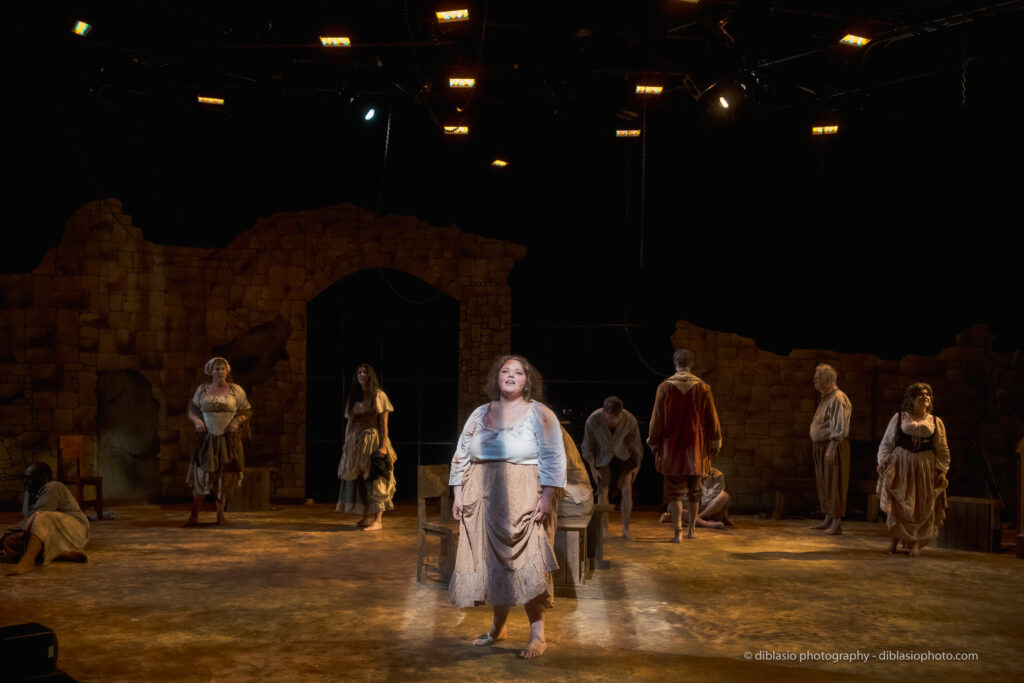
While lighting design can be individual and imaginative, it’s also a collaborative art. Lighting designers must be team players and communicate effectively, while paying close attention to detail and maintaining organization. Similarly, lighting is heavily tied to and interconnected with music, sound, and other script cues.
Some other required skills are: Designing light plots, rigging lights, electrical engineering, programming light boards, color theory, geometry, theatrical design, but most importantly having an artistic vision and working closely with the directors on stage.
While lighting design is used in many different types of performances, all requiring their own needs of design and equipment, like concerts versus ballets, we will focus on what it entails for theater.
Why Is It Important in Theatres?
The first step in a lighting designers project is to read the script entirely and find out what it means to them. After that, they can go back through and brainstorm some notes for lighting in each scene. They take into account place, time of day, weather, indoor or outdoor settings, and the mood. No one size fits all in lighting design, every production is totally different!

This strategic and balanced lighting helps the audience make sense of the plot in their minds. It also illuminates performers, focuses the audience’s eyes, supports a narrative, and triggers emotions. A good example of this is in the ballet, “Swan Lake,” where almost all of the light is white, but when the Swan comes on stage, the lights have a bit of blue. This guides the audience to make associations between lights, characters, and feelings.
Along with guiding plot and emotions, lighting helps define a space and enhance the design in many ways. It is an art and a science. But overall works to illuminate the stage, control the mood, highlight specific areas, and set the scene.
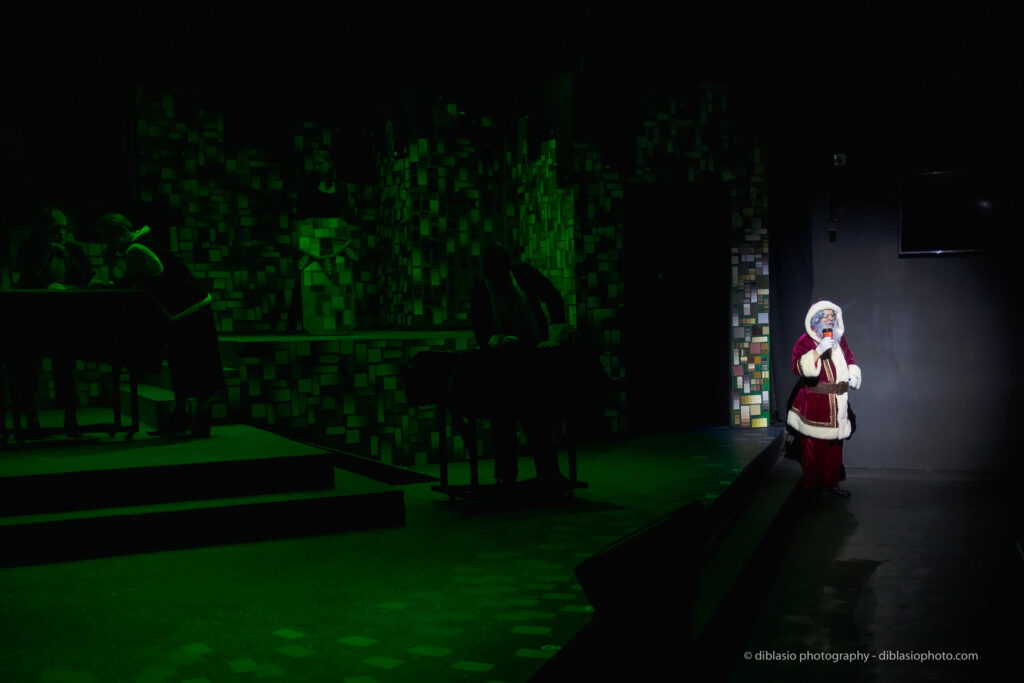
It is highly important that good lighting helps the audience see actors’ facial expressions and props they are using in order to better recognize them and read their emotions or actions. Another good use is for optical illusions, or even to direct audience eyes away from another thing to maintain the illusion of the stage while props or people move. Weathervane’s Artistic Director, Jennifer Sansfacon, notes this saying: “The eye is drawn to the brightest thing onstage, so I can tell you where to look–even if where I want you to look isn’t at the person talking.”
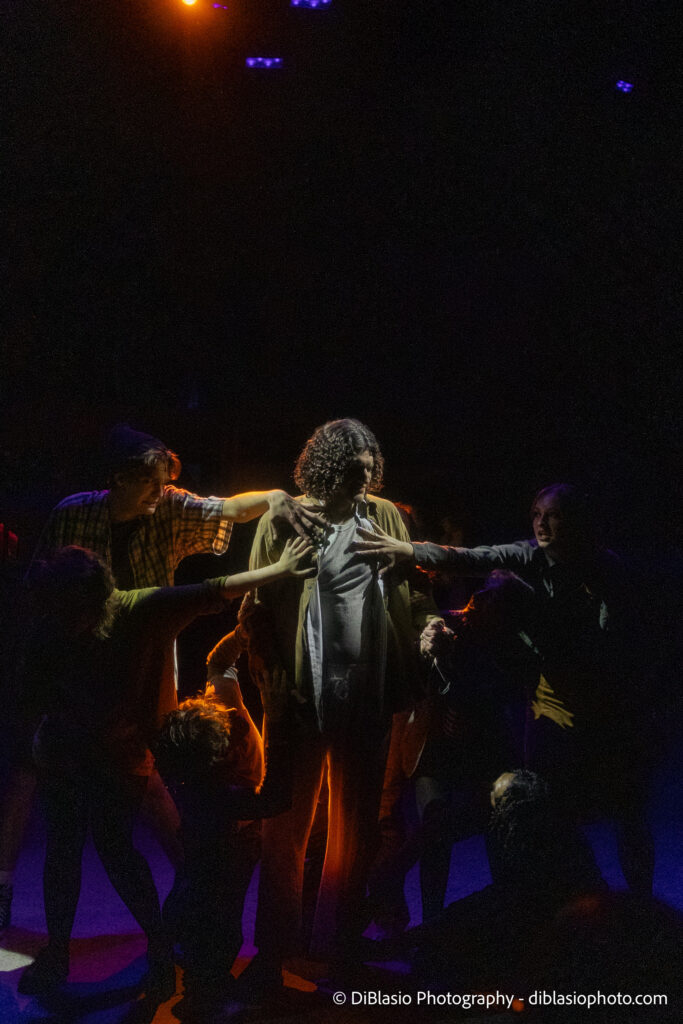
But in itself, lighting creates movement and can emphasize messages or plots, or accent the scene. The colors of lights also create associations and feelings within the viewer, like the difference between warm and cool tones, as well as red resembling love or aggression, and blue signaling sadness. In this way you can enhance the audience’s reactions and emotions through the use of color, light, and texture.
You can also use light to saturate colors on the set, highlight faces of actors and shape their bodies, and add energy!
Working closely with the director, stage manager, choreographer, set designer, and costume designer, lighting designers have a big responsibility to make the show come to life and patiently ensure that there are no weird shadows casted or inconsistencies. This often means lighting designers are collaborating in their roles with that of set designers and directors.
There are many small details in which experienced lighting designers use to their advantage to creatively enhance productions, this includes elements like fluorescent lighting making actors skin look smooth or having their own special touch, and especially knowing what they can use to give them the effect they are looking to create.
Instead of changing out a whole set, simply manipulating the lighting can transform it into a new place or time of day.
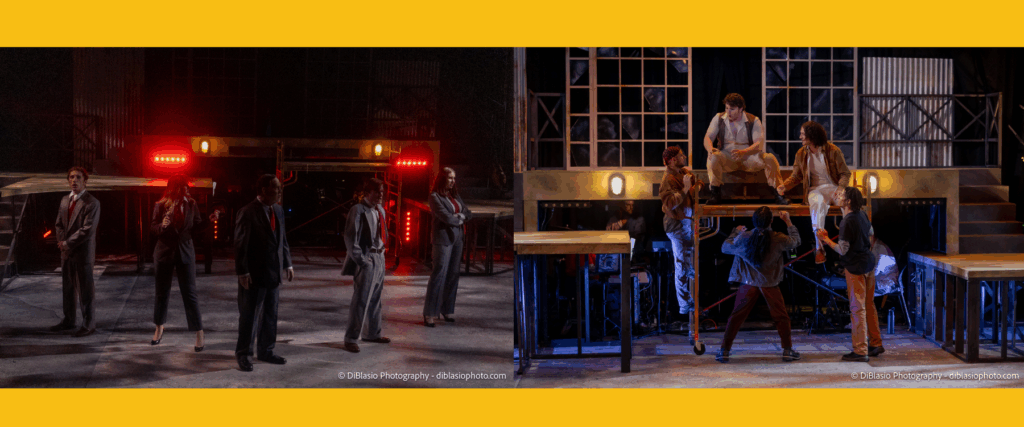
Lighting the Weathervane Stage!
Weathervane’s Mary A. Alford Theater has a newly-installed lighting system consisting of a basic repertory plot for area coverage from multiple lighting positions. Color-changing LED lights and color-changing moving lights are controlled by a CMD Key keyboard for ETC software from behind the seating area.
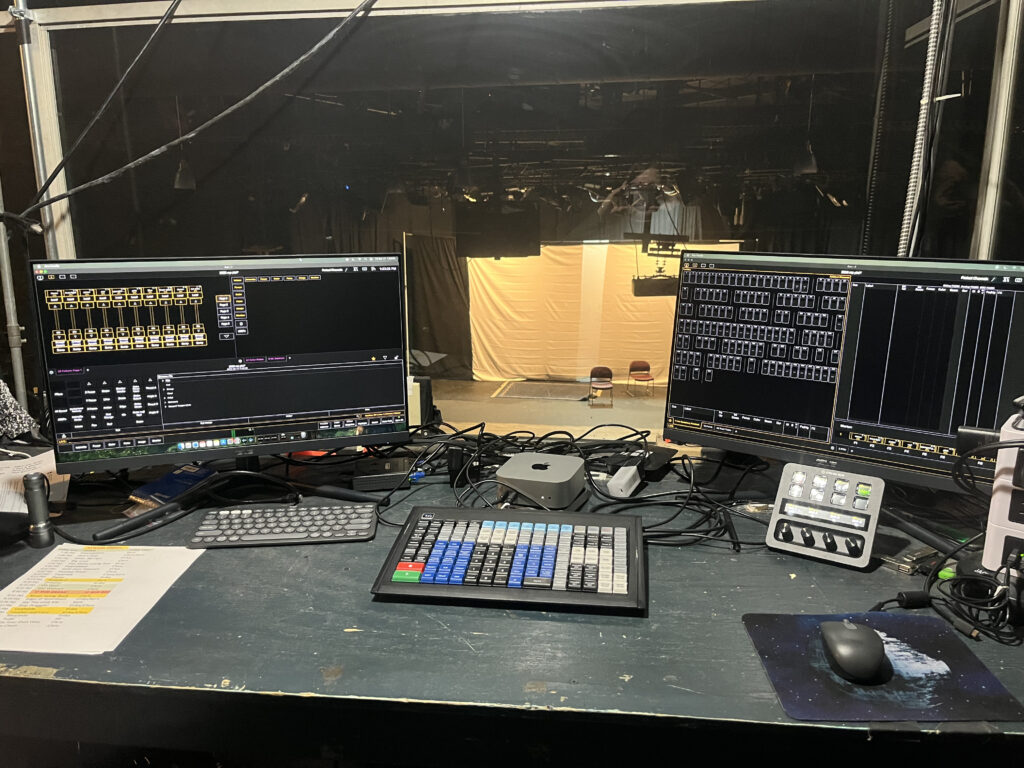
Specific to our system, we have added more creative elements into our lighting fixtures in order to produce well-rounded and cohesive shows. This allows our stage to create specific moods and environments and give the audience a good view of the actors and set.
Weathervane utilizes all areas of the space, such as our staircases, which in turn needs lighting, but further helps the audience create scenes and be immersed in them. We also use appropriate lighting for these ventures like spotlights or overhead lights.
Our theaters actually face some unique lighting challenges due to the shape of the stage and the uneven distance between the catwalk and house right and house left, providing a slightly different look on each side and some adjustments to be made. Our plot also has a mix of conventional lights (only turn on and off) and intelligent lights (mix colors, move positions, etc.). However, intelligent lights break down much quicker and much more often than conventional lights, which are much harder to fix and way more costly!
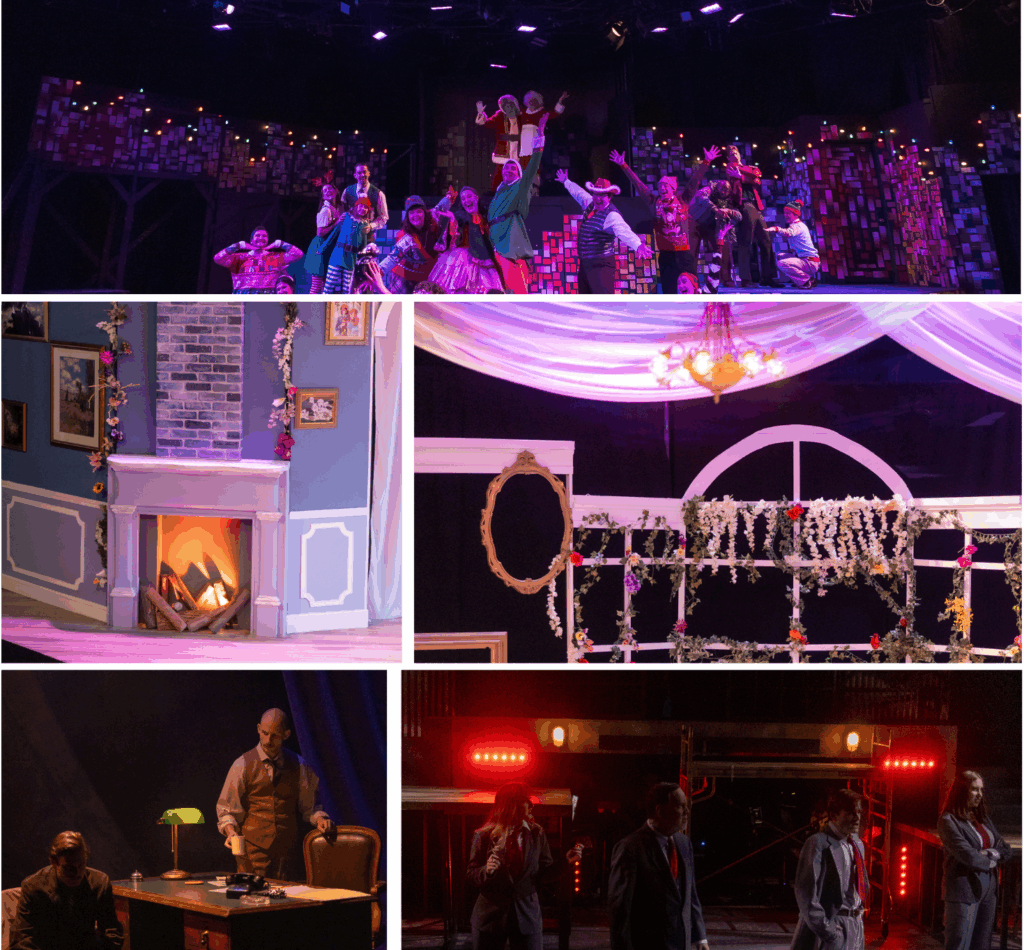
Some other creative facets of lighting design include on-stage prop lights! At Weathervane this has featured a fireplace, a chandelier, and lamps! We have also dabbled in projections onto the stage. Projections can add movement, images, patterns, or colors to the set in specific areas.
What It Requires…
Called the light plot, designers can map out their ideas and visually communicate them with directors. These plots include all lighting instruments, including their position, type, color, and focus, along with the stage and set design. It is crucial for technicians to hang and focus the lights correctly to ensure the final production matches the creative vision and is safe for all actors.
They brainstorm these plots using renderings, storyboards, and photographs, and then they must take precise measurements of the space and assess the venue’s power capacity, taking into account the location and position of fixtures, the truss, catwalk, stage, and other infrastructure. Afterwards, they input cues for color, effect, and movement into their program, and oversee installation.

Most lighting designers are freelance workers, meaning they have many sets to light at a time. For touring shows, they must travel with the group to set up the lighting at each venue. Within these venues, lighting designers work with floodlights to fill the space, spotlights that follow actors, led strip lights that change color, lights from many directions, and gobos that create textures like stained glass or starry nights.
A lot of lighting designers start out as a part of the theater crew in general and get to know lighting specific positions and responsibilities. Working one-on-one with experienced designers, and obtaining further bachelor’s degrees in related fields like Lighting Design, Architecture, Interior Design, or Theater Production and receiving their Certified Lighting Designer (CLD) Certificate, they can learn a lot and apply it to their future work as lighting designers.
This work requires creative energy, focus on detail, and an understanding of the plot and how to communicate it to the audience in an effective way. Lights play a huge role in the atmosphere of the show and what the audience can see.
Weathervane is grateful to have all the abilities to create lively performances and creative scenes through the use of new lighting technology. With the community’s support, donations have allowed us to make such improvements to our lighting and technology to better our shows! Since lighting plays a crucial role in our productions, consider donating to support our ongoing efforts to evolve as a theatre.